| www.delorie.com/electronics/usb-gpio/ | search |
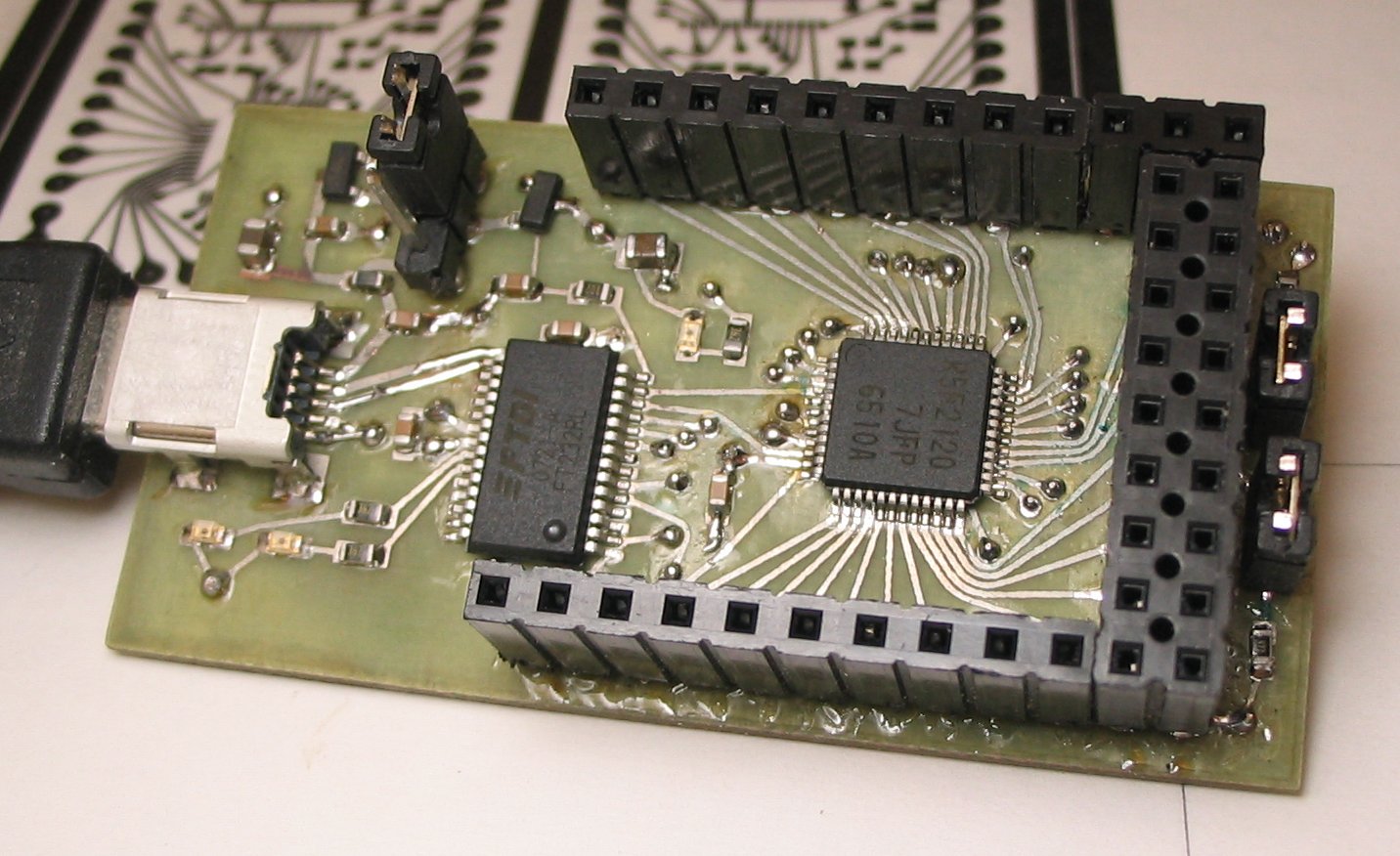
This project is a simple USB to GPIO pod - allowing you to use a standard desktop to twiddle individual lines for interfacing with any 5v or 3.3v project (as most computers are lacking in parallel ports these days, which used to be useful for such purposes). The chips are an FTDI 232R usb converter, and an R8C/20 microcontroller. The 232R has an internal clock source, and provides a clock to the R8C, so no external clock circuitry is required. The 232R also connects to the pins on the R8C needed for programming, so the R8C can be programmed on the fly over the USB cable. Thus, you can download a custom control program to the R8C and communicate with it over the usb-serial link. Since many of the R8C pins are exposed in the headers, you can take advantage of the R8C's ADCs, interrupts, timers, etc.
The board is an 8/8/13.5 four layer board, home made. The inner core is 1/2oz 16mil DS, the outer layers are each 1/2oz 8mil SS, taped on with 3M 7935 laminating adhesive. Etch was FeCl with Liquid Tin plating.
Design Files:
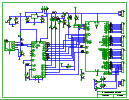
| Schematics. (pdf) |
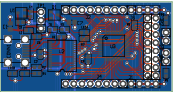
| Four layer PCB before post processing. I used 8/8 rules and 13.5 mil vias. (pdf) |
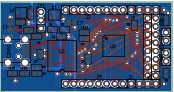
| PCB after global puller and teardrops. I want these features, but the board becomes essentially uneditable after you do them. (pdf) |
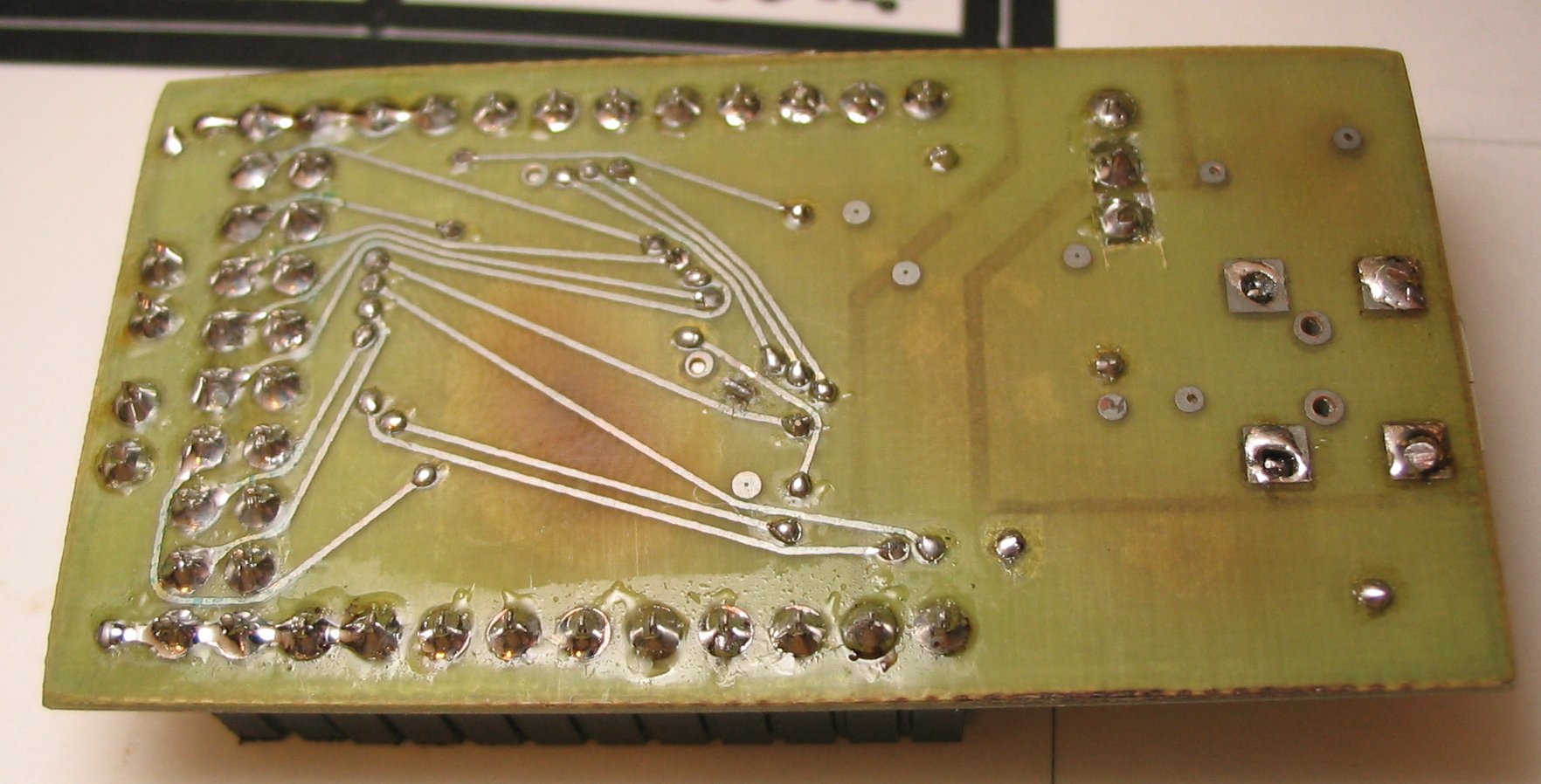
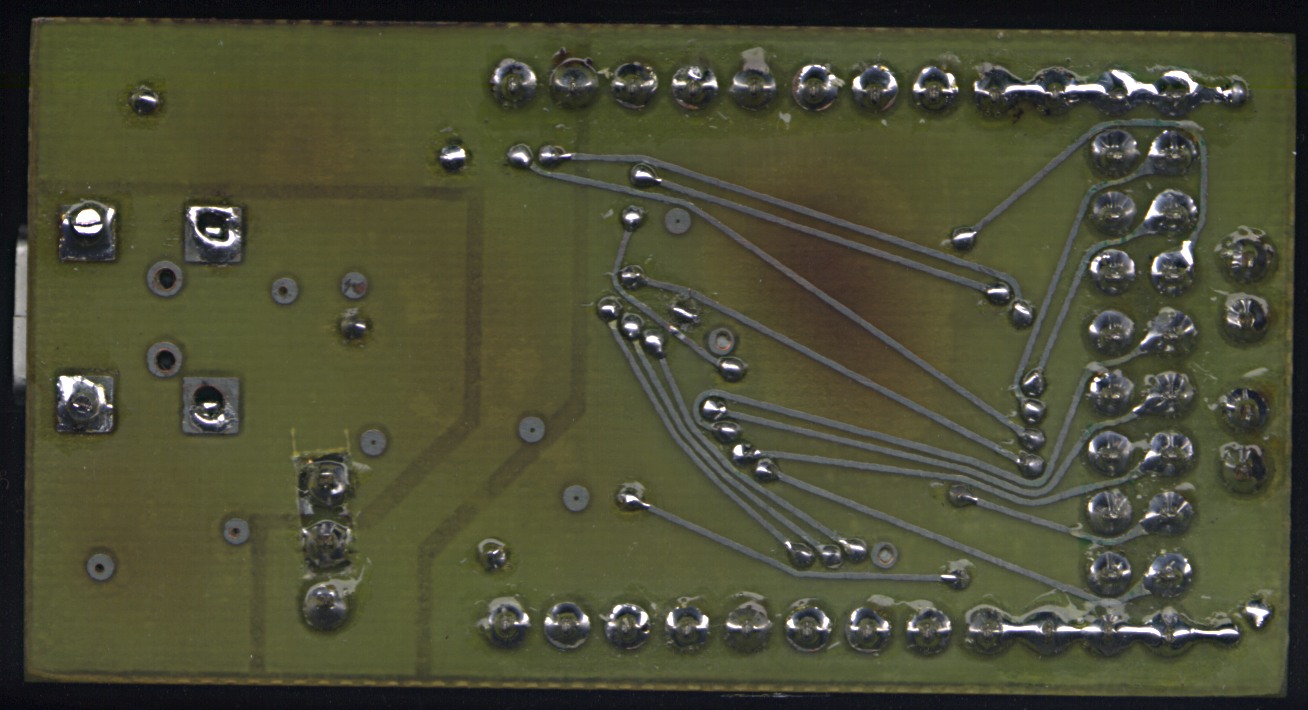
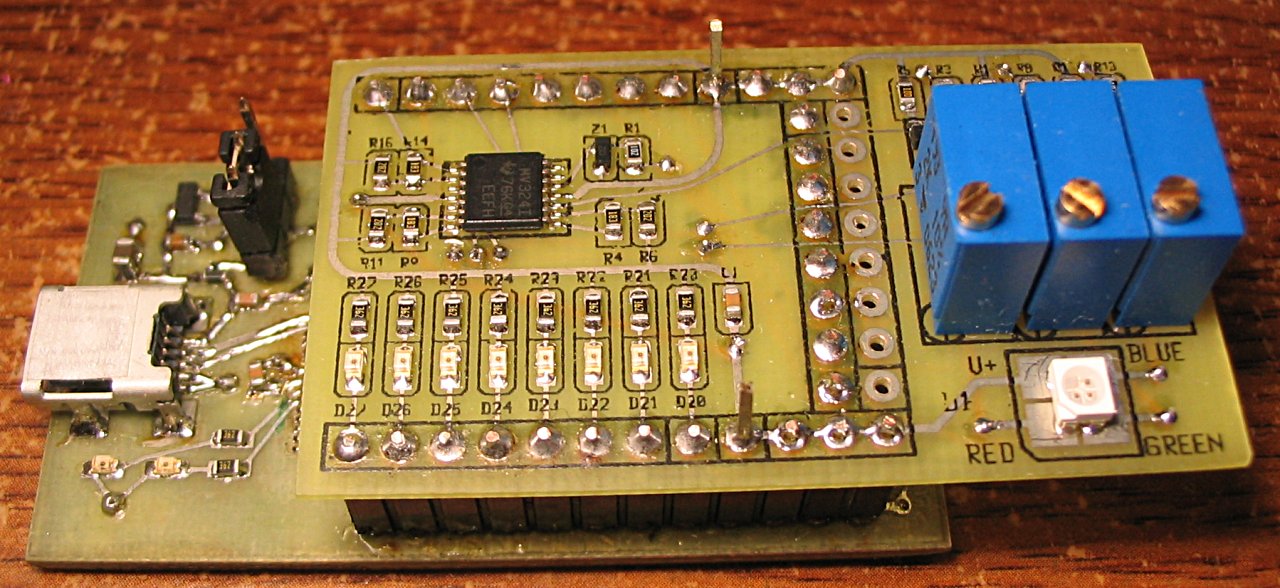
| The LED Workbench has two LED types - first, there is a standard bank of eight red LEDs on P2. Second, there's a RGB led with drive transistors on P1. The RGB LED has current sense resistors, and ADC inputs for current and voltage readings. |
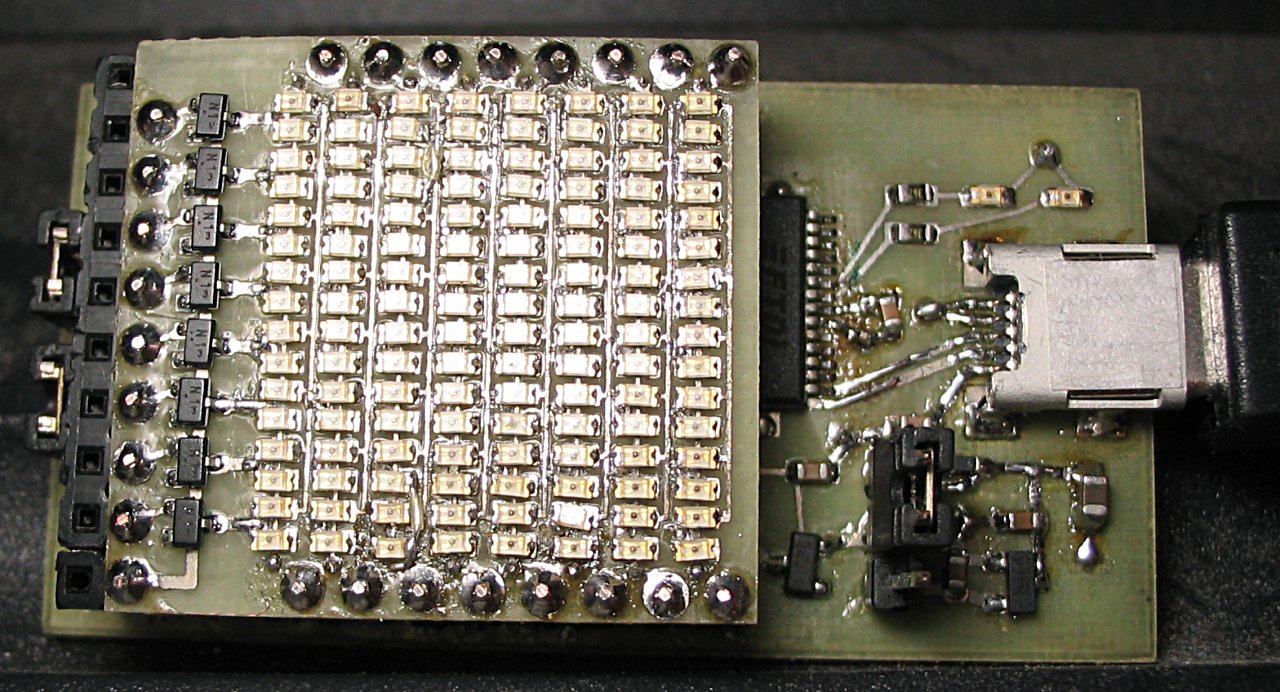
| The LED Raster module has 128 LEDs in an 8x8 grid, with one red and one green in each cell. I have a movie (2Mb AVI) of it in operation. |
EDA tools used:
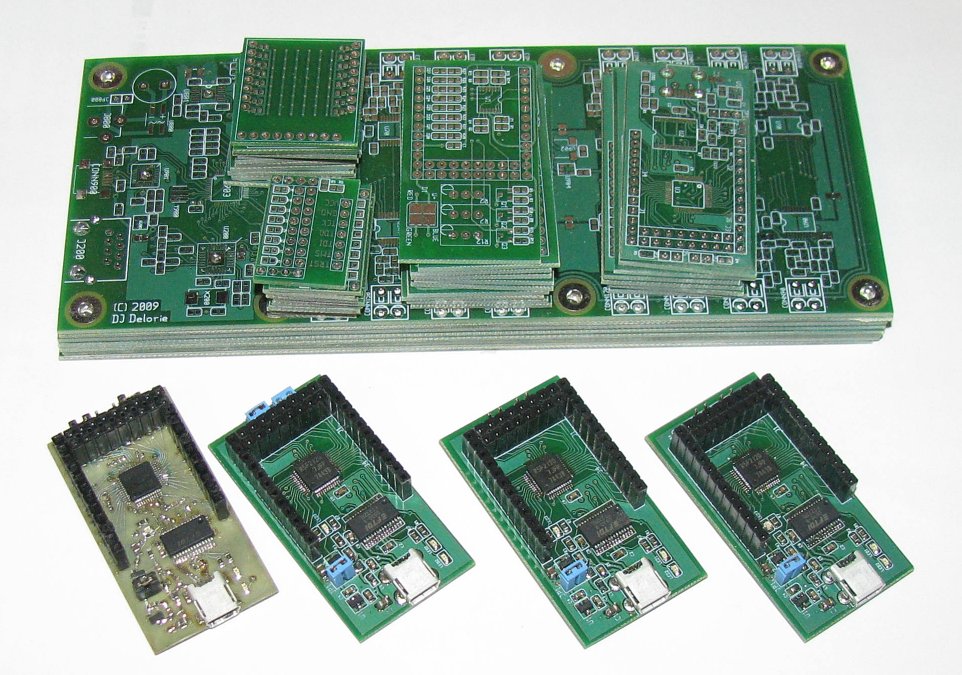
I had a batch of boards made for some projects, and have three more working GPIO pods. There's enough boards for ten full sets of pods and modules, although I don't plan on populating them all just yet. These are two-layer designs, but they worked correctly the first time - all three!
| webmaster | delorie software privacy |
| Copyright © 2009 | Updated Jun 2009 |